
Updates · News
Are plug-in solar panels legal in the UK? Yes — from 27 August.

Are plug-in solar panels legal in the UK?
From 27 August 2026, plug-in solar panels become legal to sell and use in the UK. The regulations were laid in Parliament in July following a public consultation run by the Department for Energy Security and Net Zero, and retailers including Lidl, Currys, B&Q and Amazon are expected to stock kits from launch.
The rules in short:
- 800W maximum output — the limit exists so the kit can't overload ordinary household wiring.
- No electrician required. The panels plug into a normal socket; that's the entire point.
- Typically no planning permission for a house — though flats and leasehold properties are a different story (below).
What it means for you
We install rooftop solar, so you'd expect us to rubbish this. We're not going to — for the right household, plug-in solar is a genuinely good thing, and it reaches people we simply cannot help.
Who are plug-in solar panels actually good for?
- Renters. You can take it with you when you move. Nothing is drilled, nothing is permanent.
- Flat dwellers with a balcony and no roof of their own.
- Anyone whose roof genuinely doesn't work — heavy shade, north-facing, or a roof that needs replacing first.
- People who want to try solar before committing to a full system.
If you're in one of those groups, our honest advice is: have a look at it. We can't sell you a rooftop system that suits you, so we'd rather you got something that does.
How much do plug-in solar panels save?
This is the part worth reading twice. The government's own analysis and the retail marketing don't agree.
- Government estimate: a typical 800W kit costs £400–£600 and saves roughly £70–£110 a year. Flat against a wall or balcony it's nearer the bottom of that range (~378 kWh generated a year, ~£70 saved). Angled properly at about 30°, nearer the top (~690 kWh generated, ~£110 saved).
- Some retailer claims: £100–£250 a year.
That top-end figure is more than double the government's own central estimate. Neither is lying exactly — savings swing enormously on orientation, shading, and how much electricity you use during daylight. But if you're comparing kits next week, plan on the government's numbers, not the box. It's the same advice we'd give about any solar quote, including ours.
Three catches nobody's leading with
- 800W is roughly two panels. A typical system we fit on an Essex semi is twelve to sixteen. Plug-in solar is a useful nibble at your bill, not a solution to it.
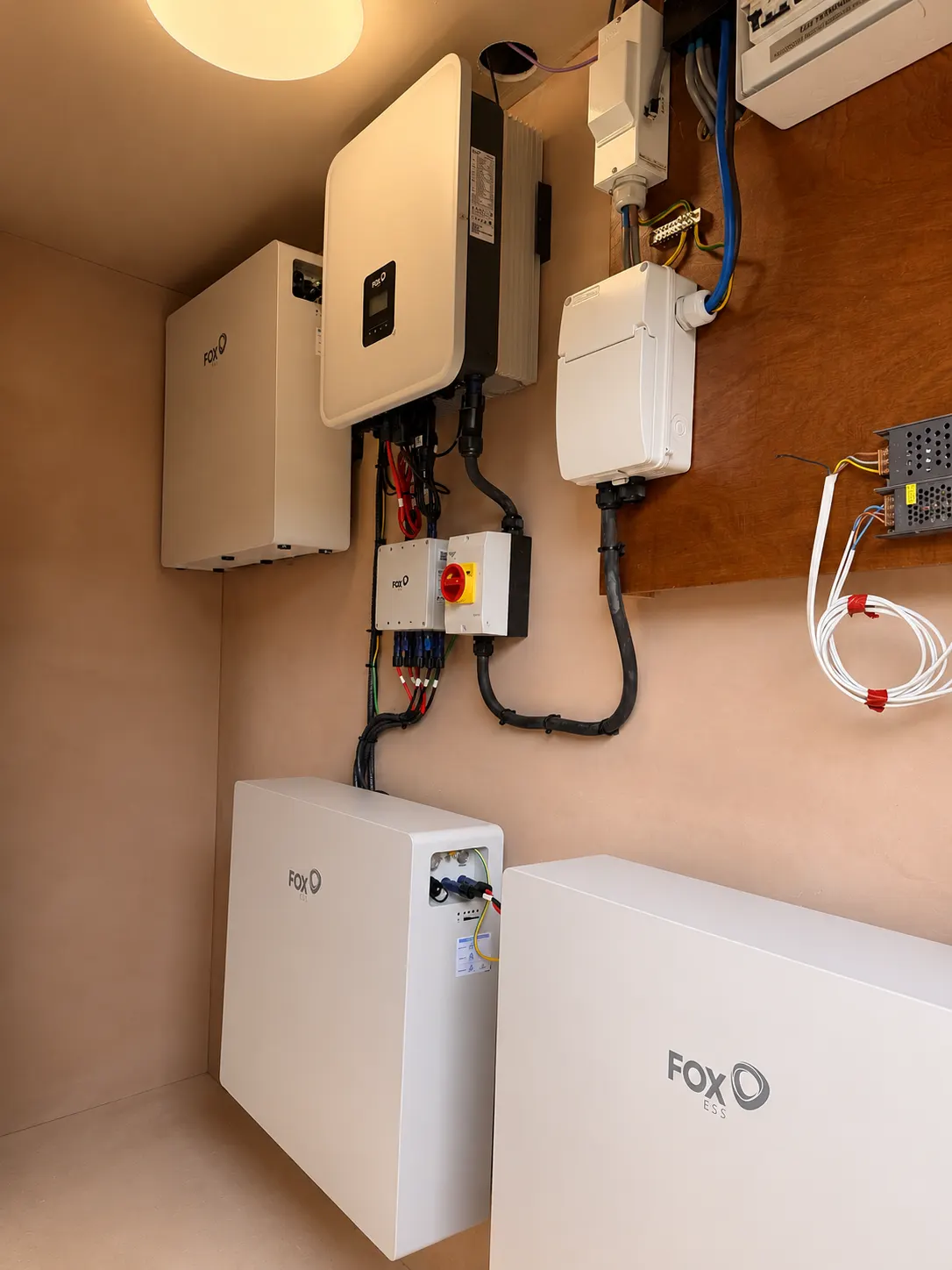
- It only helps while the sun is up. These kits don't charge a battery, so the evening — when most households actually use their electricity — is untouched. That's the single biggest difference from a proper system with storage.
- Flats are the complication, not the easy case. Ironically, the group these kits are aimed at faces the most red tape: leaseholders may need freeholder or landlord consent, and industry electrical-safety bodies have publicly flagged concerns about fixings, fire safety and installation quality in multi-occupancy buildings. Check your lease before you buy.
So: plug-in or proper solar?
Straightforward test. If you own a house with a usable roof, a full system is a different order of magnitude — many times the generation, a battery to cover the evening, export payments through the Smart Export Guarantee, and MCS certification that protects the value of the work. If you don't have that roof, plug-in solar is now a real option where previously you had none — and that's a good change.
One more thing worth knowing if you're weighing the two: installed solar currently carries 0% VAT, scheduled to end 31 March 2027 unless the government extends it. On a full system that relief is worth considerably more than a plug-in kit costs. The detail is in our 0% VAT guide.
If you'd like the honest comparison for your home
We'll tell you straight whether your roof is worth doing — including if the answer is no. Your free roof design and fixed price comes back within 24 hours across Chelmsford, Romford, Hornchurch and the rest of Essex. What a full system actually costs is set out in our pricing guide.
Figures from the Department for Energy Security and Net Zero's published analysis, checked on the date below. Published: 21 August 2026.


Get started
Is your roof worth doing?
Your free roof design and fixed price for your address — no obligation, usually back within 24 hours.
0% VAT on solar & battery until March 2027