
Guide
Can you charge an electric car with solar panels?
Last updated: 10 October 2026 · Written by the ECONEXIS team, MCS-accredited installers.
Yes, you can charge your car with solar panels. But for most homes, the best way is to let the panels power the house during the day, and charge the car overnight when electricity is cheapest. If you have a big system — about 20 panels or more — the sun can power your house and charge your car at the same time on a sunny day.
Your options at a glance:
- Option 1 — keep them separate (what we recommend): solar runs the house, the car charges overnight on a cheap rate.
- Option 2 — a solar setting on the charger: the charger sends only spare sunshine to the car.
- Option 3 — a big system that does both: about 20+ panels can power the house and charge the car together.
- Charging from your home battery: possible, but it empties the battery your house needs for the evening.
Tell us about your car and your roof — we'll recommend the right set-up and send you a fixed price, usually within 24 hours.
Which option suits you?
| If this sounds like you… | Go for |
|---|---|
| The car is out during the day | Option 1 — charge overnight |
| The car is often at home in the day, normal-sized system (around 10 panels) | Option 1, and use the solar setting on sunny weekends |
| The car is often at home in the day, big system (20+ panels) | Option 3 — let the sun do both |
| Two cars, or you drive a lot | Option 1 for the main charge, the solar setting to top up |
| You can't get a cheap night-time rate | Option 2 — make the most of spare sunshine |
Option 1: keep them separate — what we recommend
Your panels (and battery, if you have one) power the house during the day. The car charges overnight on a cheap night-time electricity rate made for electric cars. Octopus Go is one example: its cheap hours are 00:30 to 05:30, and it works with any charger.
You don't even have to set this up yourself. By law, home chargers sold in Great Britain come set to avoid the busy times of day (8–11am and 4–10pm on weekdays), and you can change the times in the app.
Why we recommend it for most homes:
- Your home uses all the solar power — the kettle, the washing machine, the battery for the evening — instead of the car taking it.
- The car is full every morning, whatever the weather did. The sun alone can't promise that in November.
- It's simple. The charger and the solar system work on their own, so if one has a problem the other carries on.
Option 2: a charger with a solar setting
Some chargers have a solar setting. They watch how much power your panels are making and how much the house is using, and send only the spare to the car. When a cloud passes, the car charges more slowly; when the sun comes back, it speeds up. The Sigenergy and Fox ESS chargers we fit both have this setting in their app.
The catch: a car needs a minimum amount of power before it will start charging — about 1.4 kW spare, a little less than a kettle uses. On a normal-sized system, once the house has taken what it needs, the spare power is often only just around that amount, so the car keeps starting and stopping. It's great for sunny weekends and for people who are at home in the day — but it won't fill the car every day.
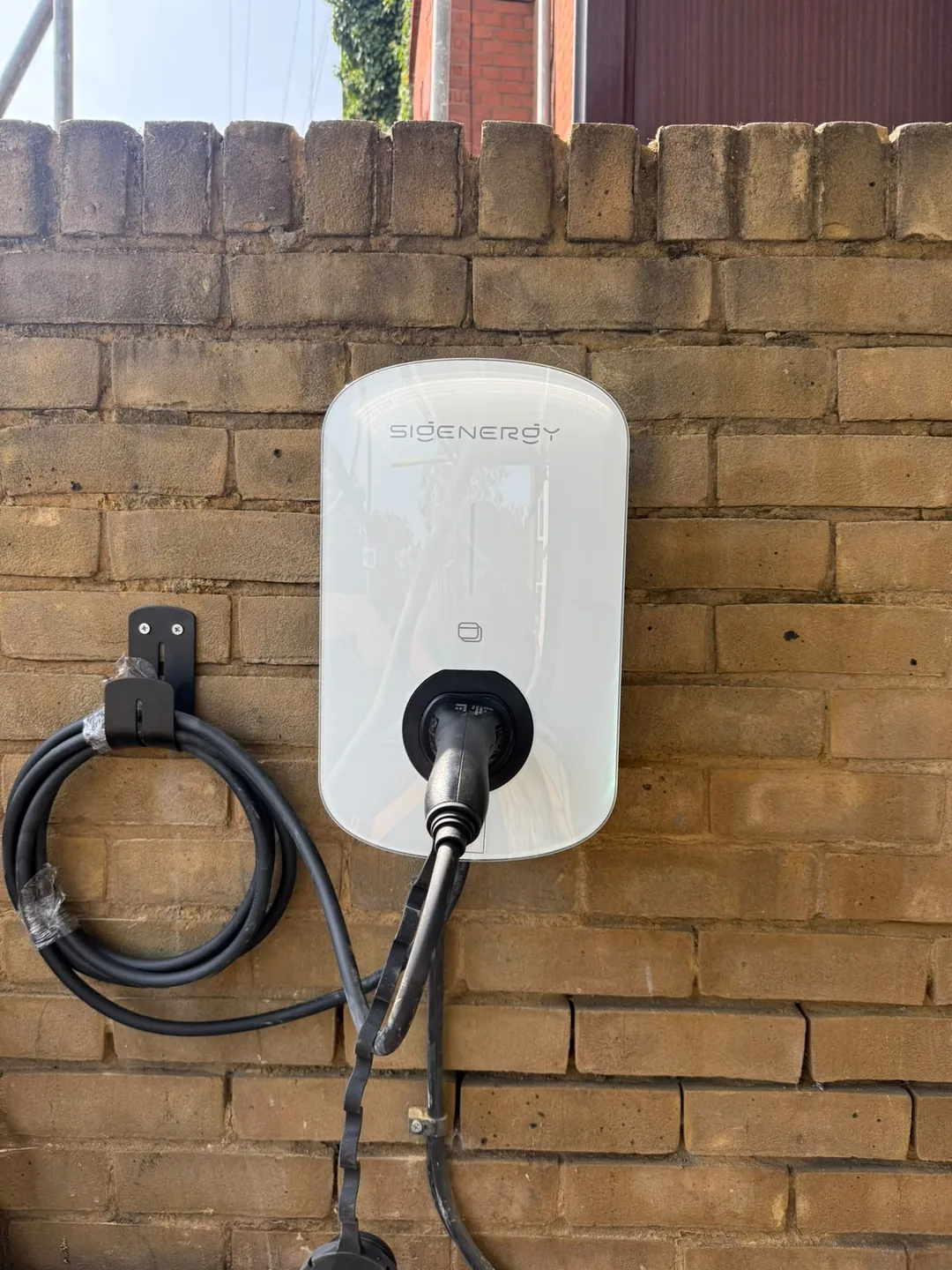
Option 3: a big system that powers the house and the car together
With a big system — about 20 panels or more (around 10 kW) — the sun can do both jobs at once. The inverter is the box that turns the power from your panels into electricity your home can use. For this option we fit a bigger one, around 10–12 kW. On a sunny day it sends what the house needs — say 3 kW — to the house, and the rest — up to 7 kW — to the car. The car then charges at close to full speed, just from the sun.
Two things worth knowing:
- The big numbers are for sunny middays. Panels make the most power around midday on a bright day. Mornings, evenings, cloudy days and winter give much less, and the charger slows down to match.
- The inverter sets the limit. The house and car together can only use as much as the inverter can deliver, so we choose the inverter with the car in mind. Bigger systems sometimes need a three-phase electricity supply — we check yours at the survey.
Charging the car from your home battery
A home battery is made to run your house in the evening, not to fill a car. A Fox ESS EP12 battery holds 11.52 kWh; most electric car batteries are several times bigger. If the car charges from the home battery, it empties it in an hour or two, and your house then buys its evening electricity from the grid — at the most expensive time of day.
It can also happen without you meaning it to. Octopus warns that on Intelligent Octopus Go a home battery can drain into the car overnight, because the battery can't tell the car apart from the house. The fix is where the battery's sensor is fitted — we set it up correctly when we install, so the battery looks after the house and the car charges from the grid.
Tell us about your car first
If charging your car is a big reason you want solar, tell us before we design your system. We'll size the panels and the inverter for Option 3. If not, we'll design for your home and set the charger up to charge overnight. Either way, we fit and set up the panels, battery and charger together, with one set of paperwork.
Quick answers
Can I charge my electric car with solar panels?
Yes. There are two ways. The panels can power your home during the day while the car charges overnight on a cheap night-time rate — this is what we recommend for most homes. Or a charger with a solar mode can send spare solar power straight into the car. With a big system of about 20 panels or more, the panels can power the house and the car at the same time on a sunny day.
How much sun do I need before the car starts charging from solar?
Your panels need to be making about 1.4 kW more than your home is using at that moment — a little less than a kettle uses. Below that, a car will not start charging from solar alone. That is why, on a normal-sized system, solar charging works best on sunny days when the house is not using much.
Do I need a special charger to charge from solar?
Yes, a smart charger with a solar setting. The Sigenergy and Fox ESS chargers we fit have one, switched on in their app. The Tesla Wall Connector does not have a solar setting of its own — Tesla's version works through the Tesla app when you also have a Tesla Powerwall, and we check at the survey whether your car and system can use it.
Can I charge my car from my home battery?
You can, but it is usually a bad idea. A home battery is made to run your house in the evening. Most car batteries are several times bigger, so the car empties the home battery quickly and your house then buys its evening power from the grid. Octopus warns that on Intelligent Octopus Go a home battery can drain into the car overnight unless the battery's sensor is fitted in the right place — we set this up correctly when we install.
Can 10 solar panels charge an electric car?
A little, on sunny days. A home charger uses about 7 kW, and 10 panels make less than that even at midday, so the car only gets what is left after the house. If charging the car from the sun matters to you, tell us and we will design a bigger system for your roof.
Get started
Solar, battery and car — set up the right way round.
Your free roof design and fixed price, usually within 24 hours.
0% VAT on solar & battery until March 2027